
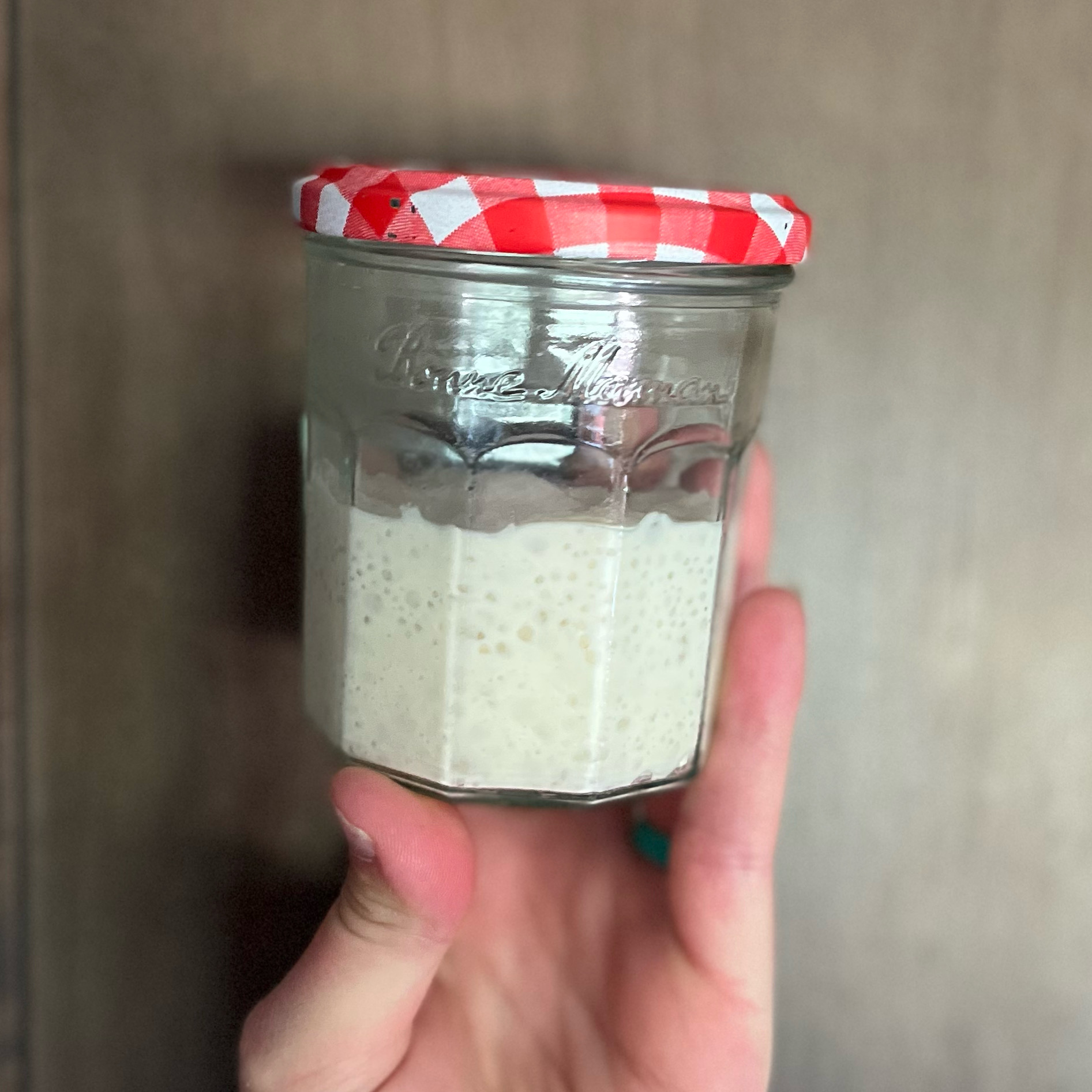
I’ve got to get this off my chest.
I don’t discard my sourdough.
I don’t practice it.
And being honest about not discarding sourdough is probably going to get me in hot water with some sourdoughers.
The ONLY time I recommend practicing discard is when you’re originally building your sourdough starter and creating strength. Once strong, you can switch to a no discard method of sourdough.
And if I’m being completely honest,
I think the discard method is wasteful and I think the discard method complicates (and overwhelms) starting sourdough.
HERES how I do sourdough. It is how I learned from my dad who learned from my great grandpa.
I recently learned that what I call the no discard method is also referred to as the Cowboy Way, which is incredibly fitting as my great grandpa was a cowboy in the mountains of Idaho!
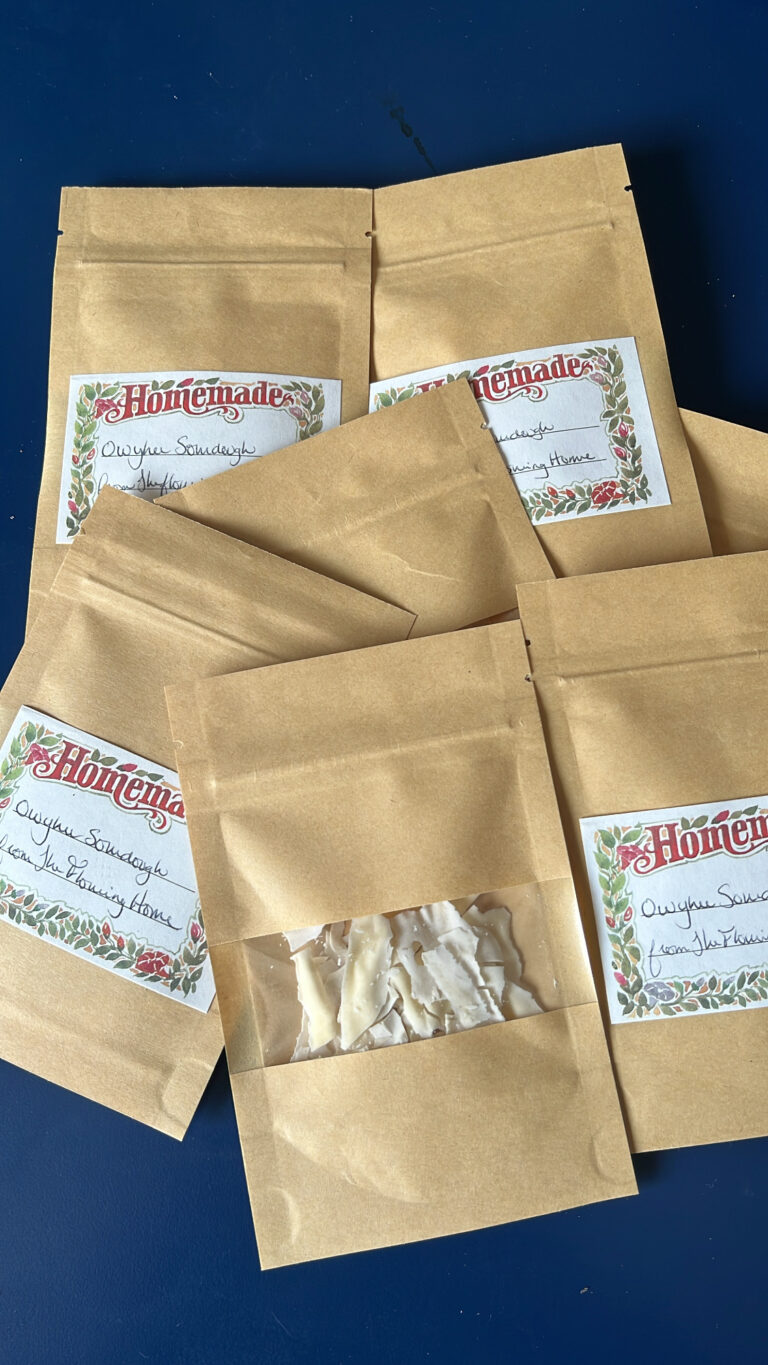
My starter is named after one of the mountain ranges he cowboyed in. If you still need sourdough starter to start your sourdough journey, meet Owyhee Sourdough!

I’m going to be using the terms mother and sourdough starter interchangeably but it means the exact same thing.
I essentially keep a sourdough MOTHER starter in my fridge at all times.
I remove my mother starter when I want to bake.
I allow my sourdough starter to come to room temperature
I check to see how much fed or discard starter I need for my recipe(s) and feed my mother starter accordingly.
LETS say I need 200g of Sourdough starter for my recipe, to my mother starter I will add= 100g flour + 100g water
When it comes to mixing my recipe(s) I’ll remove said 200g which will leave me with a scant amount in the jar/bowl.
THIS now becomes my MOTHER starter
I ALWAYS have a reserve amount. The reserve amount is my MOTHER starter.
I can either remove my MOTHER straight away or at the end but ALWAYS reserve something.
If you have COPIOUS amounts of sourdough discard and if you love sourdough but hate discarding: this method is for you.
if you love the discard method, then that is fantastic and I am not here to deter you from keeping that method.
I am here to bring awareness to the fact that you can do sourdough in a different manner.

I think sometimes Sourdough seems overwhelming, because of the discard and I’m here to explain what to do instead
It’s really easy.
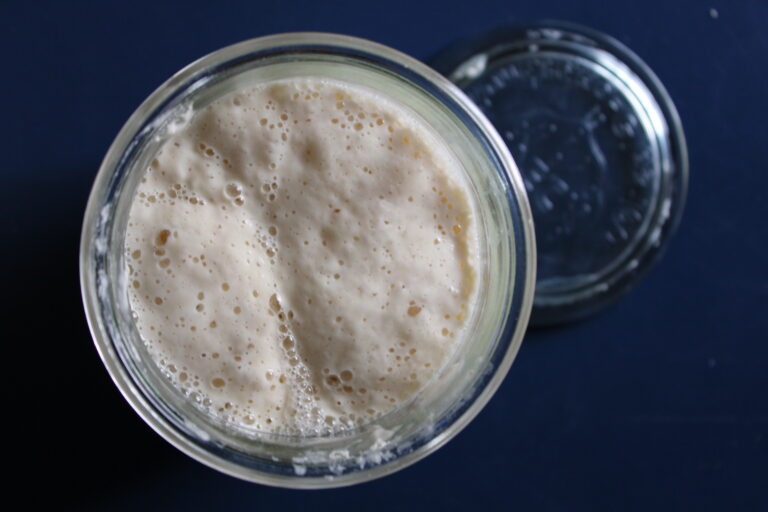
When you need your sourdough starter, you remove it from the fridge, allow your sourdough starter to come to room temperature, feed your starter and let it get all nice and bubbly and active.
Now, the next step is crucial before you make your recipe, take a little bit of the starter off the top and reserve it and now you have your sourdough mother.
You will always ALWAYS reserve off the top. You are never going to use your entire sourdough starter because if you do, you will have to create a brand new sourdough starter from scratch.
Now you’re ready to go make your recipe. If you’re making some thing else, then your feed your starter and repeat the process. However, if you just need to make one recipe (or one baking session), take your mother and put it into the fridge until next time.
Aside from this being the method I was taught, if I started sourdough all over again, the thought of discarding (in my opinion) just seems wasteful.
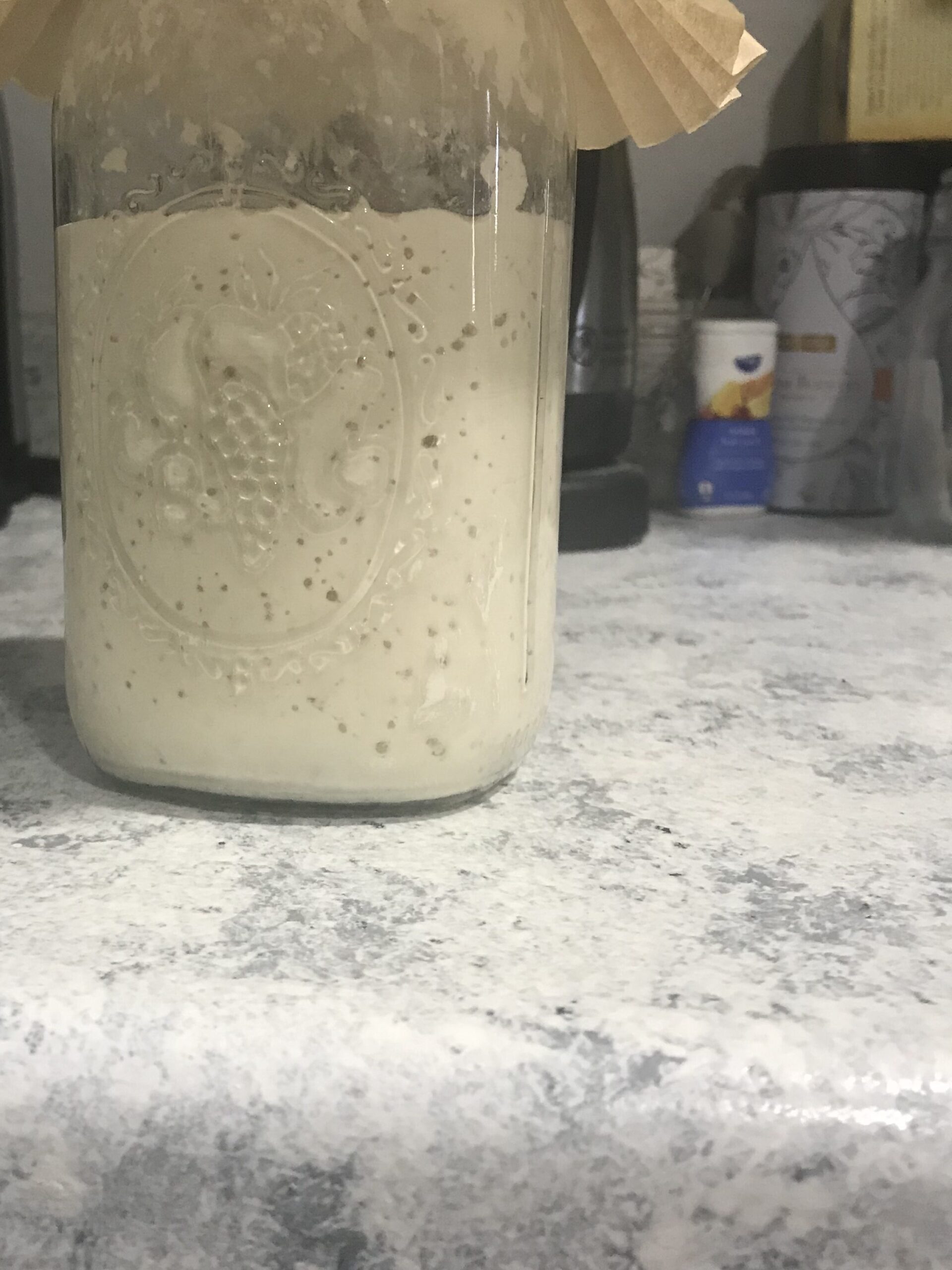
I have changed the amount I reserve since becoming more and more efficient in knowledge and sourdough skill. I used to reserve 1 cup but have since realized, I can reserve as little as few tablespoons and it will still create a powerful and strong sourdough starter.
When a recipe calls for Sourdough discard, I use active starter. But to achieve a discard sourdough, just let your sourdough go flat AFTER you have reserved your mother.
And because I use active starter, I let it ferment AND usually cast out all other leavening agents. Sourdough will naturally leaven.
Does this make me a rebel?! I’ll let you decide.
But because I’m only feeding my sourdough starter what I need, I’m not creating MASSIVE amounts of excess discard.
I’m not wasting flour resources
I’m also not creating undo stress by stressing about what to do with my discard. I even had someone say on my Instagram post that they felt they had to bake items their family doesn’t eat just because of discard.
Friends, we can stop using the discard method. And we can uncomplicate sourdough.
AND in my opinion, I am crafting a healthier baked product AND a healthier and stronger starter because I don’t discard. The strength in sourdough comes from the feeding and allowing it to ferment.
FREQUENTLY ASKED QUESTIONS

Let’s address this question: yes, you’re adding a small amount (aka your sourdough MOTHER) into flour and water. YES, you’re still letting it ferment to get active.
The most important information I want you to know is that, THERE IS NO RIGHT OR WRONG WAY TO DO SOURDOUGH!!!
You need to find what works for you.
Maybe it’s discarding.
Maybe it’s not discarding.
Maybe it’s following a recipe to the exact measurements.
Maybe it’s learning to read your dough and mixing from the heart which is what I did hear.
I personally prioritize taste over appearance.
I have purchased some pretty loaves that were insanely bland and lacking.
But the ones that may not look the prettiest are SPOT ON in flavor.
The point is to remind you: have fun and to make sourdough work for you.
You don’t work for Sourdough.
Your life should not revolve around sourdough. Rather, sourdough should be a part of your life.
You don’t need to be a slave to it, to a timeline or to discard.
Sourdough is INCREDIBLY forgiving!!!
One more sourdough tidbit, when you want to really enhance your sourdough flavor choose the right salt: Redmond salt! You can taste the difference with using quality, mineral rich salt. Code flouring will help you save at Redmond Real Salt
Have a sourdough question? I’d love to answer it for you.
So, will you try this no discard method??
Let me know.
follow along for more Simple From Scratch Nourishing Recipes and more food preserving tips @theflouringhome



Sourdough is so versatile. I’m on my fourth year, and I always keep it in the fridge. Thanks for a great post!
You’re so welcome! Thank you for your kind comment.
Do you feed it before you put it in the fridge or no?
I remove my starter from a freshly fed and active session when I remove to place the starter into the fridge
I have a well established starter that is fed a 1:3:3 ratio. Can you tell me how you’d do the no discard method using that ratio. When would I feed and when would I place in fridge and how much. My mind is blown but I can’t wrap my head around what you’re saying with my ratio.
I don’t use ratios in my baking. That’s just not how my great grandfather taught us.
Here’s the two part series I created on how I feed my starter and prepare it for the fridge so it might be helpful for you when you are ready to start baking bread or a recipe
Be sure to read the captions of these videos for more tips and tricks
Part 1: from the fridge to room temperature and mixing- https://fb.watch/CJXC1vzpBg/?
Part 2: from peak activity to the fridge: https://fb.watch/CJXFpyftLP/?
Ratios can be confusing, so I just “math” my starter feedings differently. I go in with a plan of what recipes I want to make and feeding accordingly. You’ll see that math example in the first video linked
This is a great strategy and I look forward to trying to incorporate this into sourdough methods. I have SO much starter right now because I keep missing my active window. Thanks for sharing!
I’m so glad to hear your thoughts!! You can still use your starter even if it’s fallen. It will still produce beautiful products.
Happy sourdoughing!
This was a great post! I started a sourdough starter last summer, right in the height of me getting my garden going for the year. So…even though I had all good intentions, it sadly molded over and didn’t make it! For the first week of it’s life, it was bubbly and beautiful. But then I forgot all about it, and neglect took over. I really want to try it again, but the one thing that really turned me off was how much i was discarding, even in that first week. It felt like in order for me to get it going, i needed a massive jar or bowl to keep it in. Maybe I was adding too much flour and water? I forget exactly how much I was adding each time, but I think it was like 1/2 cup of each, every time i fed it. I had soooooo much starter and had to discard so much or else my jar would overflow. I’m really interested in your methods and I’ll be coming back here to learn more! 🙂
I have to tell you how much your comment means to me!! Thank you so much for taking the time to share your experience with me. I’m cheering for you on your sourdough journey!
I know nothing about starting to m ake a starter or how to use it…everything is read is f
different …please tell me how to go about your way from the beginning . thanks so much Vicki read
For a step by step guide, checkout this post https://www.instagram.com/p/DIo5DkAOmaA/?igsh=MXRtdXNvYnVjaTVwMQ==
You see my starter has been passed down from my great grandfather to my dad and now to me. I do offer the ability to purchase my starter if that’s something you are interested in. (Currently shipping to the USA only: I’ve tried to pour every single piece of knowledge and information into this cookbook as well as create some delicious recipes that I’ve never seen before and we were craving https://theflouringhome.com/product/the-cowboy-way-sourdough-cookbook-digital-copy/)
I’m so glad I found you! I knew there had to be a way to keep a small bit of the mother and make whatever active dough I needed without having so much discard. Seem to remember my mother doing this. A friend gave me a bit of her mother starter and before I knew it, I had so much discard! I became disenchanted and gave up. Know I’m back at it with your help and knowledge! Thank you for sharing your time and knowledge 😊
It makes me so happy to hear this!! I am so glad you are not giving up on sourdough because of your experience.
Ok so am I doing what you are talking about ? I keep a jar of aka discard starter in fridge . But what it is is like 30 g of active starter and fed then put in fridge to sleep. That is my backup main one . I then feed a small starter in my brod and Taylor home on counter to bake with . Keep that going daily . I take out one in fridge once a week and take out most feed it and let it sit then put back in fridge.
If you’re still feeding and discarding daily, this unfortunately is not what I’m talking about
I started my first starter yesterday. I used the link you provided. So, do I not discard at all? I’m not sure how to go about my day two….
My way of sourdough is for an existing starter. Until it is fully creative, active and established you will need to follow the instructions.
can you post how to make a starter?
I do have directions on both instagram and Facebook, but would you also like for me to make a blog post about that too? If so, I can add this to my list of content that need to be created.
My starter is about 2 weeks. How can I tell when it is strong enough to put in the fridge and try The Cowboy Way?
You want your starter to be consistently doubling for at least 4-5 days.
I have not been making soughdough very long and I agree with you on the discard! MY question is how to determine the amounts to add to my mother to get the amount of SD needed?
So if I’m feeding my starter, I look to see what my recipe needs. If it’s 1/2c (approximately 113g) I would feed my starter 1/4 each water and flour (or 55g water and flour).
If I’m feeding my 1/4 c starter then it would look like
1/4c+ 1/4c+1/4c or 55g+55g+55g
If my recipe states 1 cup (or 226g), then the math looks like:
1/4c+ 1/2c+1/2c or 55g+113g+113g
Your total number can change based upon the number of recipes you’re making.
Once active then you’d remove your 1/4 cup (your starting starter amount) and what’s left is what you use to bake with.
I hope this helps
How do you determine how much grams you need?
Since it varies depending on your recipe.
Is there a math rule you follow to achieve this?
This way is more user friendly and absolutely not wasteful.
the recipe tells you how much starter you need either in grams or cups.
I have a question. I have a three week old gluten free sourdough starter that is doing well that lives on top of my fridge since my house keeps a little cold. I discard to keep it from becoming too much but I would love to move it into the fridge to avoid discarding, although I do sometimes make discard crackers. Now, my question is, at what point/how do I move it into the fridge, feed first and move it right away or feed and wait till it bubbles up, I’m a little lost going about it. Any help, advice, or info is greatly appreciated. I’m so new to sourdough, just started my starter January 1st. I baked my first bread a few days ago but it was so heavy and dense but I’m determined to keep trying as I have a non- celiac and miss bread. I’ve been following you for everything sourdough and am especially intrigued with the Cowboy Way and hope to learn it. Thank you for taking the time for everything you teach us about sourdough.
I am not a gluten free baker. I only use wheat. For all gluten free and sourdough I would recommend https://www.farmfreshfamilyfl.com/
Can you leave the mother in the fridge for an extended period without feeding? I’ve heard it can go in there, but should be fed at least every two weeks. Thank you!
There’s no need to feed it if you’re not planning on baking. Ideally, try to plan to use it but if you’re gone on vacation there’s no need to stress.
Hi, so glad I found you! Do you have the instructions for “starting” the starter? I’m brand new to sourdough..thanks!
Hi! At the moment I do not have a tutorial written since my starter is from my great grandfather and a family heirloom. Until I am able to get a guide written, I have a tutorial linked on a post (https://theflouringhome.com/82316/high-hydration-long-fermented-sourdough-bread/) for my friend Meg’s blog and for her tutorial
I’m a newbie too, I do not know how to start the starter
My method is for maintaining an active and established starter. Once established then you’ll switch to my method of maintaining
For a step by step guide, i refer to my friend Meg as I don’t have a guide written yet:
https://ninnescahmade.com/how-to-make-a-sourdough-starter/
You see my starter has been passed down from my great grandfather to my dad and now to me. I do offer the ability to purchase my starter if that’s something you are interested in.
This is great! I have a few discard recipes we love but I don’t need it all the time. I did the refrigerator method for a few months but now my starter/mother is sulfur-ish smelling. Is that ok? It annoys me, super sensitive nose. Ugh.
Acetone and alcohol smells are normal and a sign that it needs fed. I just made a reel on hooch that you should see, https://www.instagram.com/reel/DFJgCfVNuqa/?igsh=bnYwYTFscTY3M2s0
In the caption I explain about the smells and colors of hooch, which are normal and what to do about them.
Well Hey!
I have been a sourdough baker for 2 years and I am obsessed. I’m so impressed by your No Discard. I usually bake at least once a week or more. I do keep my starter in the fridge ( I have 3 now). I use from the fridge and then feed and put it back in the fridge after it activates. However I do discard if the starter has been in the fridge for more than 4 days. I am definitely going to try your way with one of my starters. I am so glad I found you and thank you for sharing this tip and all your posts.
Thank you for sharing your method! How long can it be in the fridge without using it and still be good? How often must it be refreshed?
It can be stored indefinitely. Ideally you’ll want to use it every few weeks but I have gone as long as 6 months and others have told me over a year. If you do decide to go this long, it will need a nourishment feeding.
I would like to learn how to make a not discard starter, where can I purchase the instructionsband thank you so much, I love baking but was terrified by the idea of wasting so much flour.
My method is for maintaining an active and established starter. Once established then you’ll switch to my method of maintaining
For a step by step guide, i refer to my friend Meg as I don’t have a guide written yet:
https://ninnescahmade.com/how-to-make-a-sourdough-starter/
You see my starter has been passed down from my great grandfather to my dad and now to me. I do offer the ability to purchase my starter if that’s something you are interested in.
In one of your posts (I think) it said never put your discard down the drain. Why is that not good?
Thanks.
You might be referring to the how to clean off the residue from your sourdough. So that there’s no confusion, I don’t discard. In the video, I was sharing that if you have a little bit of dough or starter clean off as much as you can before rinsing. I try to scrub and dilute this in water rather than letting “chunks” go down the drain. I’ve never had it happen in all of the years of doing sourdough but there are stories from other bakers where letting your starter go down the drain could clog them.
Do you feed your saved mother starter (taken before you use the rest of the starter for a recipe) before you put it in the fridge? How long can I leave the mother starter in the fridge without feeding it?
It can be stored indefinitely in the fridge. I have gone as long as 6 months, but I’ve heard reports of 1-2 years and up to 6!!
I remove my starter from the fridge, let it come to room temp, feed it. Let it rest to become active. Once active, I remove my (mother) starter and it goes into the fridge OR it gets fed again for more recipes.
I almost cried when I read how long it can be in the fridge! I was gifted a starter back in 2022 and I got so overwhelmed with discarding, I stuck it in the fridge until I could figure out what to do. I never ended up doing anything because it just seemed overwhelming and as more time has passed, I’ve been embarrassed to even ask how long is too long. What would you recommend I do at this point if I want to start with trying your method? I read another comment you left about a nourishment feed. I’d love to try again!
So long as there’s no mold or signs of contamination (you want the hooch to be clear, light gray, dark gray or black, or purple if whole wheat was used) but pink or orange hooch are contaminated (unless rye flour was used). Then it can be revived! It might need a feeding or two but I have no doubts we can get it back in action. Either email me (shari@theflouringhome.com) or message me on instagram but we can get it revived.
When you say “ feed it and let it rest until it becomes active” generally how long does it take to “become active”… is it a few hours or is it a day or two? And/or is it one feeding or multiple feedings? Thank you!
The reason I don’t put a timeframe is because every house temperature and humidity is different. For my house at 63°, it can take about 12 hours to become fully active. The colder the temperature the longer it takes. The hotter the temperature the quicker it takes.
And for me, it’s only one feeding.
How much Mother do you think you’re keeping in your jar in the fridge?Thank you!
For me personally anywhere from 1/4-1/2 cup. I don’t measure. I just merely scoop and say that looks good.
Hi, I’m so happy I found you. I have a ton (1/2gallon) of discard in my fridge right now,plus 2cups of starter in a jar. I can’t justify throwing it out. What other ways can I use it besides making bread with it.do yo have any recipes that I can use it in. I will be doing it your way from now on. What a saving,that will be
Thank you so much for sharing.
Betty
Hi Betty!
I don’t have any discard recipes on my blog. But Farmhouse on Boone, Ninnescah Made, Cultured Guru, & Little Spoon Farm Blog are great resources for more sourdough recipes. You can make tortillas, bagels, cookies, pie dough, coffee cakes, and more. I choose to personally only use active starter in my recipes because I long ferment everything I make and I use the active sourdough as my leavening agent.
I am in my third month of sourdough, but I have thrown out so much discard! I started out trying to keep it, but it got overwhelming, so I started throwing it out. I really want to switch to this method. I saw a comment above where you said you can bake with flat starter. I was told I HAVE to bake within a certain window and it has caused me endless stress. I love in FL, and it’s so hot a humid here that I constantly miss the window and sometimes go a week without baking, even though I want to. I was told if I missed the window, and my starter didn’t pass the “float test,” it wouldn’t be strong enough to rise well and leaven my bread. Please help me stop this vicious cycle! Thank you!
Oh no! Ok, first, I don’t bake with flat starter. I only bake with active starter. Now, the float test isn’t reliable so ignore this test. If you live in a humid environment, like Florida, you’ll need to be using more flour or less water. Humidity will add hydration to your dough so you’ll have to compensate. If my starter has peaked and started to fall, I would still use it, but not when it’s flat.
Hot temperature make fermentation go faster so I would suspect your peak time would be in the 4-6 hour range.
I hope this helps!
How long can you leave it in the fridg? I don’t bake very often.
I’ve left mine in the fridge for as long as 6 months and have other followers comment and tell me they’ve left theirs for 1-2 and even 6 years!
Hello Boots,
This is very helpful. I’m just starting the sourdough and started the started with a dehydrated starter from Amazon. Sorry I didn’t know you are selling it too. Just stumbled on this blog post.
Today is the third day. I started the started on the first day with 2tbsp of the dehydrated started, 2tbsp of all purpose flour and 2tbsp of filtered water. Repeated the same for day 2. On day 3 added whole wheat flour and all purpose flour 3 tbsp. The starter has doubled in 12 hours: how can I actively feed it without discarding. Please help me with that, I appreciate it:
Here’s the two part series I created on how I feed my starter and prepare it for the fridge so it might be helpful for you when you are ready to start baking bread or a recipe
Be sure to read the captions of these videos for more tips and tricks
Part 1: from the fridge to room temperature and mixing- https://fb.watch/CJXC1vzpBg/?
Part 2: from peak activity to the fridge: https://fb.watch/CJXFpyftLP/?
Have you ever baked exclusively with einkorn? Any tips? My bread loaves are very dense and sourdough was delicious but also a bit dense. I’ve learned it doesn’t need a lot of water (55% hydration or so) and doesn’t handle as much kneading. Any tips you have?
I have and it’s definitely NOT the easiest grain to use for bread. I need to devote some time this winter to working with it. It works great in cakes, cookies and Dutch babies.
Please tell me how you start your starter because this is the way I want to start making bread and bagels. Thank you also for sharing your way of doing sourdough.
My starter came from my great grandfather. Are you in need of a tutorial on how to create a starter?
if you are starting with 1/4C of the mother, what is the maximum water and flour you could add to it in a single feeding?
Great question, the most I’ll personally do is 5 x a recipe or enough to make 10 loaves but I’m not a microbakery so 10 loaves is my limit to bake at a time/day because of space but mostly because this causes my hands to dry out too much that I can’t afford to make more loaves than that.
Do you have a time period by which you’d say a new starter is mature for fridge living? I started from a dehydrated little pack from a local micro bakery. I’ve been using for about two weeks, it’s been rising well for three. Thoughts?
It’s fine to be placed in the fridge.
Your method is so common sense. Thank you! I just have to questions, though. One, do you use plain tap water or filtered water? And the other, I only want to bake one loaf so I know I cut your numbers in half but does that include the starter? Would I still use the 1/4 mother starter with half the flour and water? Thank you.
You would cut the amount of starter needed in the recipe. And yes I use filtered water. I have a clearly filtered water pitcher (https://get.aspr.app/SH1AOo)
I see you make your sourdough into rounds that are rather “hole-ey”. I want to make sandwich style sourdough, that doesn’t have big holes. Would I make it the same, just put it into a loaf pan to rise/bake, and maybe knead it a little instead of stretch and fold? Thanks!
Kneading would help produce a tighter crumb (aka not as hole-ey).
Hello,
your story led me to wonder about how your great grandfather managed a starter at a time when there were no refrigerators, I wonder if you have any insight or stories to share about that.
Also I would really love a tutorial on how to start the starter from scratch directly from you.
To keep the starters cold before refrigeration, ice boxes were used or they would use the stone steps or root cellars.
To create a starter, the tutorial is here: https://fb.watch/Hr_SlsGPp2/?
You mentioned in the article the BRAND of salt you use. Is there a particular variety of their salt that you prefer for sourdough?
Yes! The only brand I use in my kitchen is Redmond real salt. I typically use the coarse for everything and I love their seasonings too! (Discount code: flouring from https://glnk.io/oq72y/theflouringhome)
how often do I need to feed the mother in the fridge? What if I don’t cook anything requiring starter for a couple of weeks or more?
I only ever feed when I bake. This could be skipping all summer, like I currently am doing, or it could be every day during winter. It just depends upon my baking schedule, the needs for my family and friends as well as my menu.