
Disclosure: Some of the links below are affiliate links. This means that, at zero cost to you, I will earn an affiliate commission if you click through the link and finalize a purchase.
You’re never going to believe the secret ingredient!!!
Before I tell you, save this post and reference this guide for when your starter needs some extra love and nourishment.
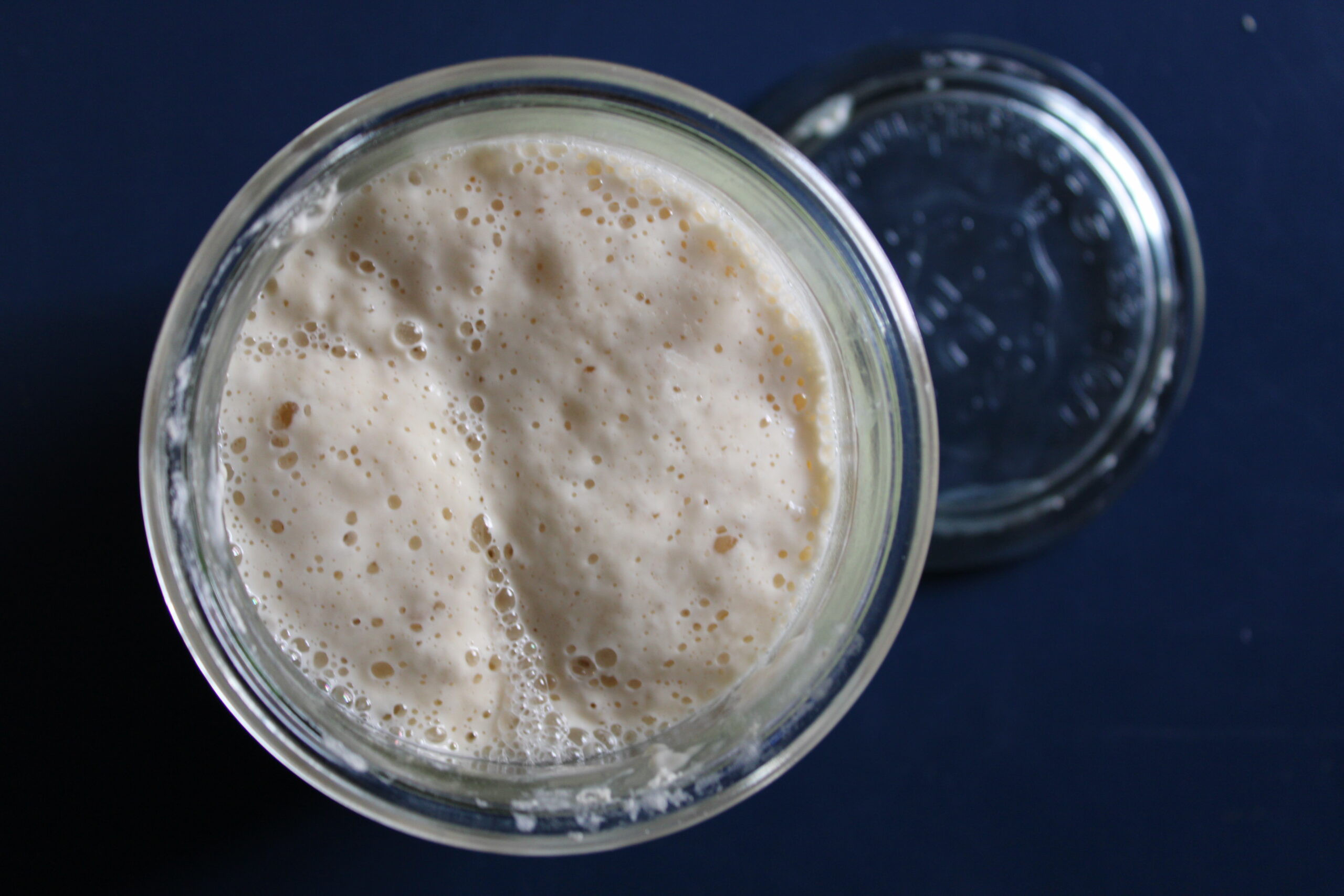
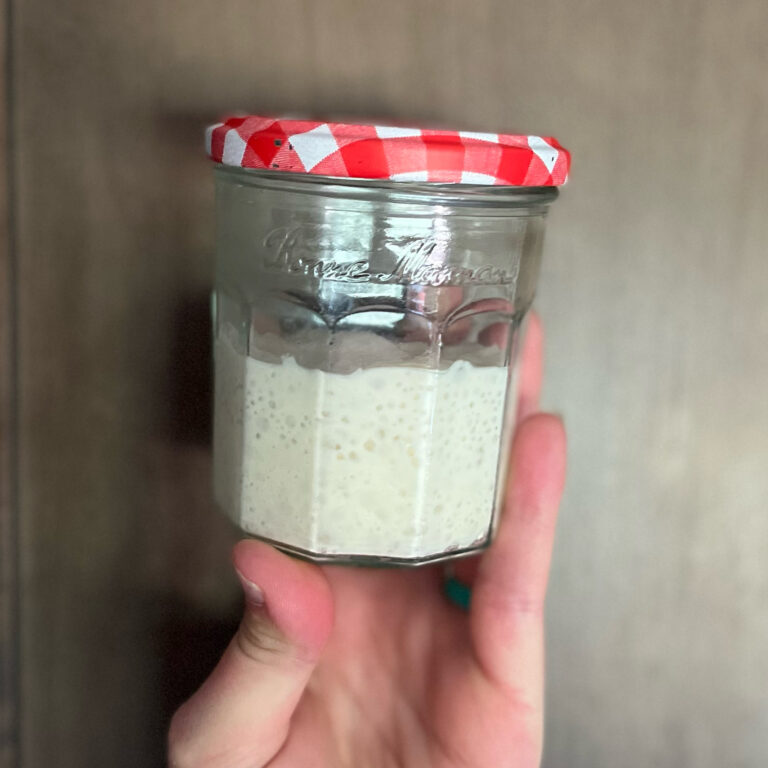
Signs your sourdough starter is happy
- DOUBLED OR TRIPLED IN SIZE or VOLUME
- SUPER BUBBLY
- SOMETIMES OVERFLOWS
- ACTIVELY SEE BUBBLES POPPING
- SOURDOUGH STRANDS
- SMELLS YEASTY AND SWEET
- LOOKS VISIBLY DIFFERENT FROM WHEN IT WAS FIRST FED
- AND IF YOU REALLY FELT INCLINED, YOUR SOURDOUGH STARTER SHOULD HAVE A SWEET/FERMENTED FLAVOR (but you really don’t need to taste your starter as the other signs will suffice)
If your sourdough starter IS NOT showing these signs, it’s time for a boost!
Have you started your sourdough journey? If not, start yours today! Head to my shop and purchase your sourdough starter.

My great grandpas secret!
My great grandpa was a cowboy in the mountain ranges in Idaho. He traveled with his sourdough and always had it available.
Here’s his trick:
Use POTATO WATER to refresh your sourdough starter
- begin by discarding all but 2 tablespoons of the starter
- Grab a potato (I prefer Idaho Russets), peel it, wash it and slice it.
- To a pot add your potato top with filtered water and bring to a boil
- Boil your potatoes until they are fork tender and remove from the stove.
- Allow your potatoes and water to cool because the very last thing you want to do is pour the hot boiling liquid on top of your starter. (this will kill your sourdough starter)
- Once your water is at room temperature pour off a 1/3 cup of water and add that into your 2 tablespoons of starter.
- mix well and add a half a cup of organic all purpose flour (my choice of flour is central milling).
- Mix and incorporate your flour top with a lid, beeswax wrap or a wet dish towel and set aside to rise
You can watch the how to video here.
Tips
If you can place your sourdough start in a warm environment (but not the microwave or the oven), give it time to feed on the potato water and flour. Allow it to rise like normal. My starter NEVER rises in 4 hours. Whoever started passing this information out is causing you undo stress.
Remember sourdough takes time and you can’t rush the process but you should see that your starter has doubled in about 12 hours
if your house is cold like mine is (it was 62° the morning I initially started sharing this tip for instagram), then you need to know cold temperatures SLOW fermentation but it does not STOP fermentation. It just needs time.
Try this and let me know if it works for you
This method is what my great grandpa swore by and it’s allowed us to have a sourdough starter that’s at least 80+ years old
Other sourdough posts:
I have other sourdough posts that might interest you:
- 7 Signs your Sourdough Starter is Happy
- Frequently Asked Sourdough Questions
- NO DISCARD Sourdough Method
happy baking friends.
Love, Boots
PS drop any questions in the comments below
Disclosure: Some of the links below are affiliate links. This means that, at zero cost to you, I will earn an affiliate commission if you click through the link and finalize a purchase.



Thanks for sharing your great grandpa’s recipe! I’ve never heard of using potato water to refresh your starter. That’s so cool.
Woah…potato water?!! How very cool. I’ve got to try this, thank you!
I just tried this….now we wait. Fingers crossed…and being an Idaho girl myself I used an Idaho potato as you suggested…:) Thanks for sharing. Ill update…
Please keep me updated!!
I had a starter going in the spring, and put it I the fridge during the summer, it separated and smelled a little funky. I thew it out and have since read I should have stirred it and continued on….really?
So long as there are no signs of mold or bacterial contamination (hooch/liquid on top is pink, orange or red), Funky smells like vinegar & acetone are normal. They’re a sign your starter is hungry and needs feeding. Those smells go away after feeding and should be sweet and yeasty smells
I’ve tried the potato water, it worked wonderfully!
The starter tripled in size!!!!
GREAT advice! Years ago I used potato water to make a stater. Was the absolute BEST starter! Kept it for many years. The starch in the potato water gave it the sugar it needs to do it’s HAPPY DANCE. 😆 🤣
You said it perfectly! Happy dance indeed!!
Can you use potato starch and water as a sub if I don’t have any real potatoe water on hand?
I have a starter in the back of my fridge that i have not used for about 2 yrs. So it has a darker liquid that has risen to the top.
I cannot say it will work because it’s not just the starch we’re after. Rather it’s the added nutrients (vitamins and minerals) from the potato that also play a factor.
Thanks for your recommendation!
My house has been about 57 degrees Fahrenheit this winter and my starter won’t rise. It develops a light-brown liquid after several days, but no rise (then I do a 1-1-1 feeding). I’m going to give this a try.
I’ve been using organic bread flour rather than all purpose, should I switch over?
Cheers!
Do not switch flours. For me, all purpose and bread are interchangeable. I just have better access to a great all purpose flour.
are you feeding your starter every day? That liquid on top is hooch (https://www.instagram.com/reel/DFJgCfVNuqa/?utm_source=ig_web_copy_link&igsh=MzRlODBiNWFlZA==) and is absolutely normal. It is a byproduct of fermentation and a sign it is hungry. If you are not feeding it every day, you should be. (unless you are doing the no discard method I teach, which I call the Cowboy Way).
Cold temperatures dont stop fermentation but do slow it. so you do need to give it more time to ferment. Also, try adding more flour than water for a thicker sourdough starter. Your starter may like a heavier feeding. Mine does. My starter prefers to be thicker in winter and a bit thinner in summer.
Lastly, for heat, on top of the fridge is a warm spot or an upper cabinet would be where I would put your starter. While I dont do anything special for my starter with my cold house (63), for you I would consider a location change to one of these locations for while you are feeding.
Thank you so much! I really appreciate your suggestions. I just bought a potato so I’ll give it some potato water with larger portion of flour.
Thanks again!
Cheers!
Boots, so glad to have found you and your site. I love sourdough bread and everything else sourdough but I have grown “sour” on baby sitting and discarding perfectly good flour that can be used in anything else. Just read the potato water post so we are going to try it and quite discarding. Thanks so much. Mike
Once the potato water does its thing what do I do next. Do I continue to feed and discard and how much or is it ready to make bread? Your tutorials and posts are great. Thank you
Then you go back to regular feedings of water and flour. I do not practice the discard method. So for my personal feedings it’s feed for the recipe I’m making, once active, reserve my starting portion and this goes into the fridge. The remaining starter in the bowl is what I use to bake with
I tried the potato water and it’s not working. It has hardly risen at all in over 24 hours. It’s been 20 days and has never doubled though it has been having great bubbles. I used your video to make the starter and feed it. I’m using filtered water and unbleached flour. The house temp stays around 72. Don’t know what I’m doing wrong.
Are you trying to make a starter? The potato water trick is meant for use on an existing and established starter. It can take 2-3 weeks (or longer) to make a starter. Are you placing a lid and sealing your starter after you feed it? Or how are you covering it? What’s the exact amount your feeding your starter and how much are you removing?
I’m trying to make a starter. I’m putting a lid on the starter but not sealing it. I’m using about 1/4 cup of unfed starter, adding 1/4 C filtered water and probably 1/3 cup of unbleached bread flour. Thank you for replying.
Now this is making more sense. I’d decrease the amount of starter to be more around an 1/8 of a cup. And it’s not uncommon for a starter to take, minimum, 2-3 weeks to become established. You’re doing everything right, it just needs time
Sooo… I left my 100 year old starter in the fridge, forgot about it for a long time (health issues), pulled it out today and it’s hard as a rock. I scraped the sides and ground it into a powder. What ratio of powder to potato water do you thinkI should try?
any help is very appreciated! #SaveEsther
I would do exactly as the directions state on the post.
I’m so glad I found you. Your approach with Sourdough is exactly how I want to be with Sourdough. So far, Ive learned my kitchen is cold in the winter so when i feed my starter for a recipe, it takes longer double or triple. When I BF on the counter, my SD takes longer on the counter. I have one that will be ready to bake, in the fridge now after BF on the counter all night. I’m excited to bake her this evening after work.